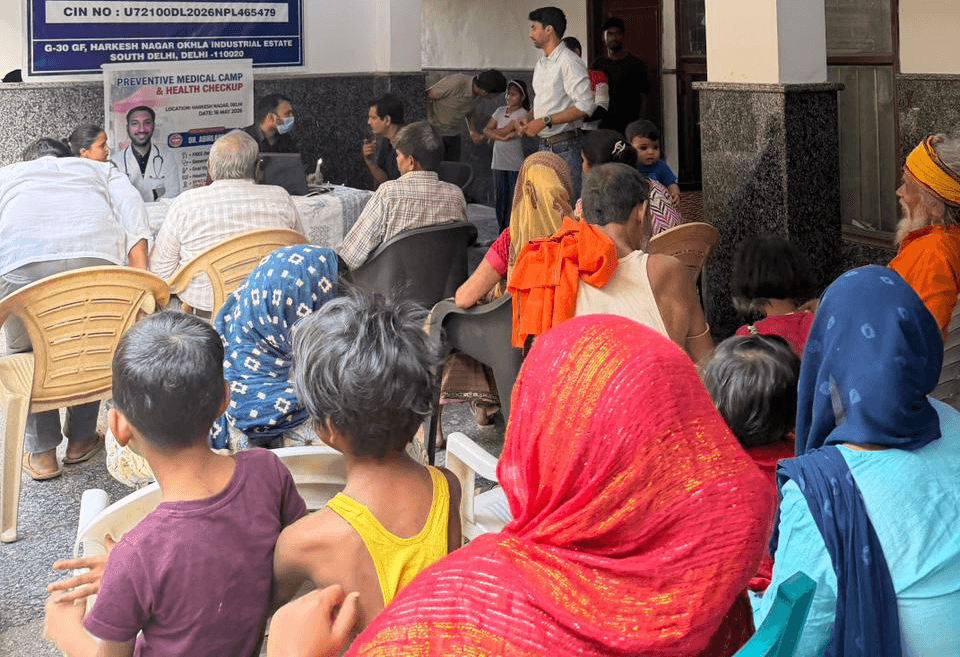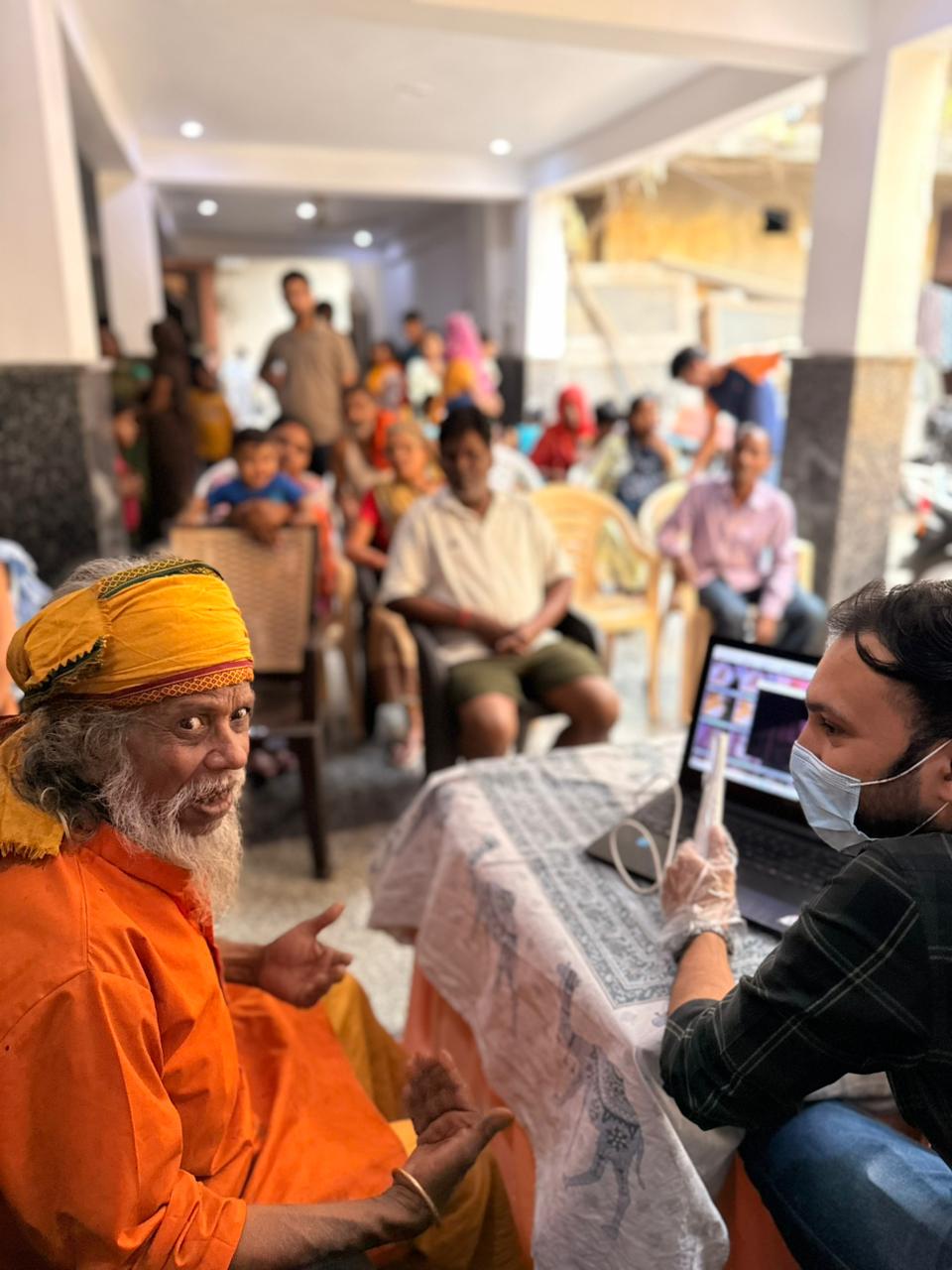
A comprehensive initiative dedicated to reducing maternal and infant mortality. We provide vital prenatal guidance, nutritional support, and early pediatric interventions, partnering with communities to ensure both mother and child have the healthy foundation they deserve.
A Mother's Life. A Child's Future.
Every pregnancy is a story of hope. But in too many parts of India, it is also a story of risk — risk that is not inevitable, not unavoidable, and not acceptable.
India has made real and meaningful progress in maternal and child health over the past three decades. The maternal mortality ratio fell from 398 deaths per 100,000 live births in 1997–98 to 88 per 100,000 live births in 2023 — a reduction of nearly 78 percent in twenty-five years. Infant mortality has also improved, dropping to 35 per 1,000 live births as of NFHS-5 (2019–21), from 41 in NFHS-4.
These are not just statistics. They are lives — mothers who came home, children who grew up.
And yet, the work is far from done.
India still accounts for a disproportionate share of global maternal and child deaths. Stark inequalities between states, between rural and urban areas, and between income groups mean that progress is uneven. A woman in Kerala faces a maternal mortality ratio of 19. A woman in Uttar Pradesh faces one nearly ten times higher.
This blog looks at why maternal and child health matters, what the key challenges are in India, and how preventive care — delivered at the community level — can change outcomes.
Why Maternal and Child Health Is a Public Health Priority
Maternal and child health is not a narrow concern. It sits at the centre of every development goal.
A mother's health during pregnancy directly shapes her child's health for life — affecting their birth weight, brain development, immune function, and risk of chronic disease in adulthood. This is known as the developmental origins of health and disease (DOHaD) framework, and it is supported by decades of evidence.
When a child receives adequate nutrition in the first 1,000 days of life — from conception to age two — their cognitive development, immune system, and physical growth are fundamentally shaped for the better. When they do not, the consequences can be irreversible.
Investing in maternal and child health is also economically rational. India's child malnutrition burden alone costs the country an estimated 2.6 percent of GDP annually in lost productivity and increased healthcare costs, according to research published in PLOS ONE (2023).
The Key Challenges in India
Maternal Mortality: Progress With Persistent Gaps
India's national MMR of 88 per 100,000 live births (SRS, 2021–23) is below the global average of 197, but still more than double the UN Sustainable Development Goal target of fewer than 70 deaths per 100,000 live births by 2030.
The leading causes of maternal death in India are:
Obstetric haemorrhage (excessive bleeding) — responsible for approximately 47 percent of maternal deaths, particularly in poorer states
Pregnancy-related infections (sepsis) — accounting for around 12 percent
Hypertensive disorders of pregnancy — including pre-eclampsia and eclampsia, causing 7 percent
The highest MMRs are concentrated in states like Assam, Uttar Pradesh, and Madhya Pradesh — states that also have the highest rural populations and lowest healthcare infrastructure density.
Source: Trends in Maternal Mortality in India, PubMed/BMJ, 2021. https://pubmed.ncbi.nlm.nih.gov/34455679/
The underlying drivers are not mysterious: limited antenatal care visits, low rates of institutional delivery in rural areas, delayed access to emergency obstetric care, and poor postnatal follow-up.
According to NFHS-5, while 88.6 percent of women in India received at least one antenatal care visit, only around 58.1 percent received the recommended four or more visits. This gap matters. Regular antenatal check-ups allow early detection of anaemia, hypertension, gestational diabetes, and foetal positioning — all of which, if undetected, become emergencies.
Child Mortality and Malnutrition
India's under-five mortality rate stands at 42 deaths per 1,000 live births (NFHS-5, 2019–21) — meaning India alone accounts for approximately 14 percent of global under-five deaths. The neonatal period (first 28 days of life) is the most vulnerable: 25 out of every 1,000 children born in India do not survive their first month.
The most preventable causes of neonatal death are:
Preterm birth complications
Birth asphyxia (lack of oxygen at delivery)
Neonatal infections (sepsis, pneumonia)
Malnutrition is the underlying condition that makes all of these deadlier. Despite improvements, 35.5 percent of children under five in India are stunted (too short for their age), 19.3 percent are wasted (too thin for their height), and 32.1 percent are underweight, according to NFHS-5. These are not numbers from a generation ago — they are from a survey conducted between 2019 and 2021.
Low birth weight remains a critical issue: 18 percent of newborns in India are born with low birth weight (below 2.5 kg), a figure higher than many neighbouring countries including Sri Lanka.
Source: NFHS-5 India Report, Ministry of Health and Family Welfare, 2021. https://dhsprogram.com/pubs/pdf/FR375/FR375.pdf
What Preventive Care Looks Like
The encouraging reality is that the vast majority of maternal and child deaths are preventable with interventions that already exist and are already proven.
Antenatal Care (ANC)
At least four antenatal care visits during pregnancy — for blood pressure monitoring, urine testing, blood tests for anaemia and infections, iron and folic acid supplementation, and ultrasound if available — can identify and manage most complications before they become emergencies.
Iron deficiency anaemia affects over 50 percent of pregnant women in India (NFHS-5) and is a major contributor to maternal deaths and low birth weight. Routine iron and folic acid supplementation through ANC visits directly addresses this.
Skilled Birth Attendance and Institutional Delivery
Delivery attended by a trained health worker — whether in a facility or at home — dramatically reduces the risk of death from haemorrhage and birth complications. In India, institutional delivery rates have risen to 88.6 percent nationally (NFHS-5) — a major achievement. However, rural and tribal communities still lag significantly.
Postnatal Care
The 48 hours immediately after delivery are the most dangerous for both mother and newborn. Early breastfeeding initiation (within one hour of birth), monitoring for postpartum haemorrhage, and newborn warmth and hygiene are simple interventions that save lives. Only 68.5 percent of Indian mothers received postnatal care within two days of delivery (NFHS-5) — meaning nearly one in three did not.
Immunisation
India's Universal Immunisation Programme (UIP) provides free vaccines against 12 vaccine-preventable diseases, including tuberculosis, polio, diphtheria, tetanus, measles, and Hepatitis B. Full immunisation coverage among children aged 12–23 months reached 76.4 percent in NFHS-5, up from 62 percent in NFHS-4. Closing the remaining gap could prevent tens of thousands of child deaths annually.
Source: Ministry of Health and Family Welfare, Universal Immunisation Programme. https://nhm.gov.in/index1.php?lang=1&level=2&sublinkid=824&lid=220
Nutrition in the First 1,000 Days
The window from conception to a child's second birthday is called the "First 1,000 Days" — a period of rapid brain and body development that is uniquely sensitive to nutrition. Actions during this window include:
Exclusive breastfeeding for the first six months of life
Introduction of appropriate complementary foods at six months
Continued breastfeeding up to two years
Micronutrient supplementation (Vitamin A, zinc, iron) for children
India's POSHAN Abhiyaan (National Nutrition Mission) targets these interventions at scale, but implementation quality remains uneven at the grassroots level.
Source: UNICEF India, First 1,000 Days. https://www.unicef.org/india/what-we-do/first-1000-days
The Role of Community Health Workers
India's ASHA (Accredited Social Health Activist) workers are one of the most important community health programmes in the world. Over one million ASHA workers operate at the village level, supporting antenatal follow-up, facilitating institutional delivery, promoting immunisation, and advising on nutrition and hygiene.
Their reach is extraordinary — but their effectiveness depends on training, support, and the community's trust in them. Grassroots NGOs and awareness programmes play a critical role in reinforcing the messages ASHA workers carry and in reaching households where stigma, poverty, or distance keep families from seeking care.
India's Policy Architecture: What Exists
India has a strong policy foundation for maternal and child health:
Janani Suraksha Yojana (JSY) — cash incentive programme for institutional delivery, credited with significantly increasing hospital births
Pradhan Mantri Matru Vandana Yojana (PMMVY) — maternity benefit programme providing financial assistance to pregnant and lactating mothers
POSHAN Abhiyaan — National Nutrition Mission targeting stunting, wasting, and anaemia
Mission Indradhanush — intensified immunisation campaign targeting unvaccinated and partially vaccinated children
RMNCAH+N Strategy — the Reproductive, Maternal, Newborn, Child, Adolescent Health and Nutrition umbrella strategy of the National Health Mission
The challenge is not the absence of programmes. It is ensuring that these programmes reach the women and children who need them most — in the most remote villages, in urban slums, in communities where women have little autonomy over their own healthcare decisions.
What You Can Do
If you are pregnant or know someone who is: Ensure at least four antenatal care check-ups are completed. These are free at all government health centres. Do not skip them.
For newborns: Initiate breastfeeding within the first hour of birth. Ensure all recommended vaccines are given on schedule through the UIP. Keep a vaccination card.
For young children: Monitor growth regularly. A child who is not growing at the expected rate may be suffering from silent malnutrition, even without visible signs. Seek advice from your ASHA worker or primary health centre.
For communities: Talk openly about antenatal care, safe delivery, and nutrition. Stigma, misinformation, and silence cost lives. A mother who knows her rights and her options is a safer mother.
Conclusion: Every Number Is a Name
India's maternal and child health story is genuinely one of progress. The numbers have moved — significantly and measurably — in the right direction. That progress is the result of policy investment, dedicated health workers, and communities that chose to act.
But the risks of maternal death remain highest in rural and tribal areas of north-eastern and northern states, and the malnutrition crisis among India's children is a challenge that numbers alone cannot convey. Behind every statistic is a mother, a newborn, a family.
At Varya Life Sciences Foundation, our Maternal and Child Health programme focuses on the most upstream preventive actions: antenatal awareness, nutrition counselling, immunisation drives, and connecting women in underserved communities to the services that already exist but are out of reach.
The science is settled. The programmes exist. The gap is in the last mile — the village, the slum, the household where no one came to explain what was available.
That last mile is where we work.